
OPINION
Scrabble Tiles Used by McCormick to Assign Elon Musk Cases in Chancery Court, After Cries of Bias and Corruption
Dear Friends,
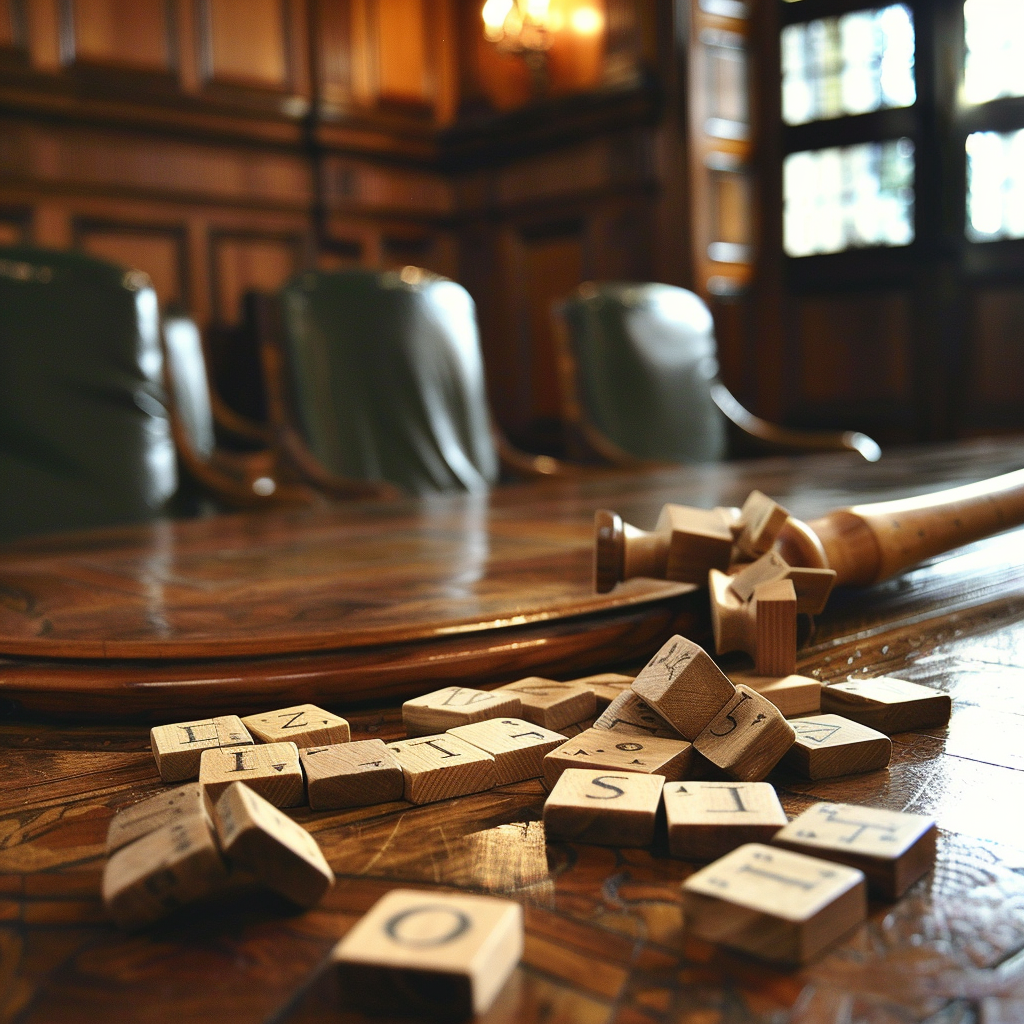
Where there is smoke, there is fire, folks. Less than a week after recusing herself from Elon Musk cases due to a LinkedIn social media move that put a spotlight on bias, Chancery Court Chancellor Kathaleen McCormick assigned cases using Scrabble tiles, which brings a level of transparency to the Chancery Court after years of your Coastal Network calling for it.
Assigning Musk’s cases with this unusual method comes after the court began assigning cases using a “wheelspin” method, which pulled the power away from the judges’ picking cases. That came years after the Citizens for Judicial Fairness and your Coastal Network calling for a fair method of assigning cases, to combat what I and many see as corrupt.
In August, TransPerfect CEO Phil Shawe said of the “wheelspin” move, “This change may not fix everything, but it’s a monumental step for Delaware toward a more predictable, transparent, and fair legal system. I’m beyond grateful to Governor Meyer, Speaker Brown, my TransPerfect colleagues, Citizens for Judicial Fairness and all those who help push this reform across the finish line.”
Read Karl Baker’s Spotlight Delaware story for the details of this Chancery Court change and Musk’s cases in our Chancery Court. Are you pleased with this move? Please share your feedback, which is always welcome and appreciated.
Respectfully Yours,
JUDSON Bennett–Coastal Network https://spotlightdelaware.org/2026/04/06/delaware-judge-randomly-assigns-elon-musk-cases-using-scrabble-tiles/
News
Delaware judge randomly assigns Elon Musk cases using Scrabble tiles
by Karl Baker
April 6, 2026
With claims of bias looming over her, the chief judge of Delaware’s Court of Chancery used a bag of Scrabble tiles to select new judges on Thursday to preside over cases involving Elon Musk — the world’s richest man.
While the analog method was unusual for the powerful business court, it did leave little doubt that the ultimate selection of Vice Chancellors Nathan Cook and Bonnie David would be insulated from future claims of tampering or bias.
It also followed a decision from the Delaware court last year to begin choosing judges for cases in a random manner.
The selection occurred during a tense, late-afternoon hearing on Thursday after Chancellor Kathaleen St. Jude McCormick had summoned the army of attorneys representing Musk and others to her Wilmington courtroom.
There, McCormick revealed her method of arbitrarily choosing new judges to replace her.
She pulled out a cloth bag containing six scrabble tiles with the letters C, F, L, Z, W and D. The letters represented the first initials of the last names of the Delaware Court of Chancery’s six other judges.
McCormick then began to explain her process, in which one attorney would inspect the tiles before two others would draw one tile each.
As the selection was set to begin, McCormick abruptly looked to Rudolf Koch, an attorney from Wilmington’s Richards, Layton and Finger — a firm representing the electric car maker, Tesla, where Musk serves as CEO.
“Mr. Koch, do you view this as funny?” McCormick asked.
“No,” Koch replied, softly.
>> ‘Thanks $2 billion’
The admonition came more than a week after Koch and 10 other attorneys placed their names on a motion calling on McCormick to recuse herself from the Delaware litigation that involved Musk.
It also followed years of claims from Musk himself that Delaware’s courts had treated him unfairly. The sentiment was primarily fueled by McCormick’s past rulings that invalidated billion-dollar pay packages from Tesla to Musk.
In response, Musk in 2024 directed his companies to move their legal homes out of Delaware. He also launched a campaign calling on other business leaders to leave the small state.
For years, Musk’s claims of poor treatment in Delaware had little to substantiate them – beyond unfavorable court decisions. That changed last month when McCormick’s LinkedIn account showed a supportive reaction to a post critical of the billionaire.
After a California jury found Musk liable for more than $2 billion in damages for manipulating Twitter’s stock price in 2022, a consultant who had worked on the lawsuit posted a congratulations to his legal team “for standing up for the little guy against the richest man in the world.”
The post also stated, “Sorry Elon. Sorry Quinn Emmanuel. Thanks $2 billion for your help in this trial.”
The law firm Quinn Emanuel Urquhart & Sullivan represented Musk in the California case.
On March 23, McCormick’s LinkedIn account showed that she “supported” the post – a formal designation made by clicking the “like” button, then scrolling to an image of a hand underneath a heart.
When Musk’s attorneys learned of McCormick’s apparent reaction to the post, they filed motions for her to step down from her Delaware cases.
In response, McCormick was defiant.
In a letter sent March 24 to the attorneys, the judge stated that she didn’t believe she had clicked on the ‘support’ icon. If she had, she “did so accidentally,” she said.
McCormick then asserted that she did not believe she had accidentally clicked on the support button — leaving an apparent insinuation that her social media account had been compromised.
McCormick said she reported “the suspicious activity” to LinkedIn.
“Today, my account was locked when I attempted to log in to check the status of my suspicious-activity report,” McCormick said in the letter.
Over the following days, several news sites reported on the fallout surrounding McCormick’s social media activity, including that Musk’s attorneys had asked the judge to remove herself from three shareholder lawsuits.
While still defiant, McCormick ultimately granted the motion to reassign the cases to other judges. Ultimately, they were only after one had been voluntarily dismissed.
In her letter granting the motion, McCormick again stated that she is not biased against Musk, noting that she had “dismissed a suit against Mr. Musk just last year.”
In the letter, she also directed all attorneys who had placed their names on the motion to appear in court “to witness what they requested.”